
I am often asked about my creative process, about how the complex architecture of a fantasy novel or the tense undertones of a mystery take shape. The answer might surprise you, because it has nothing to do with the cold precision of technology.
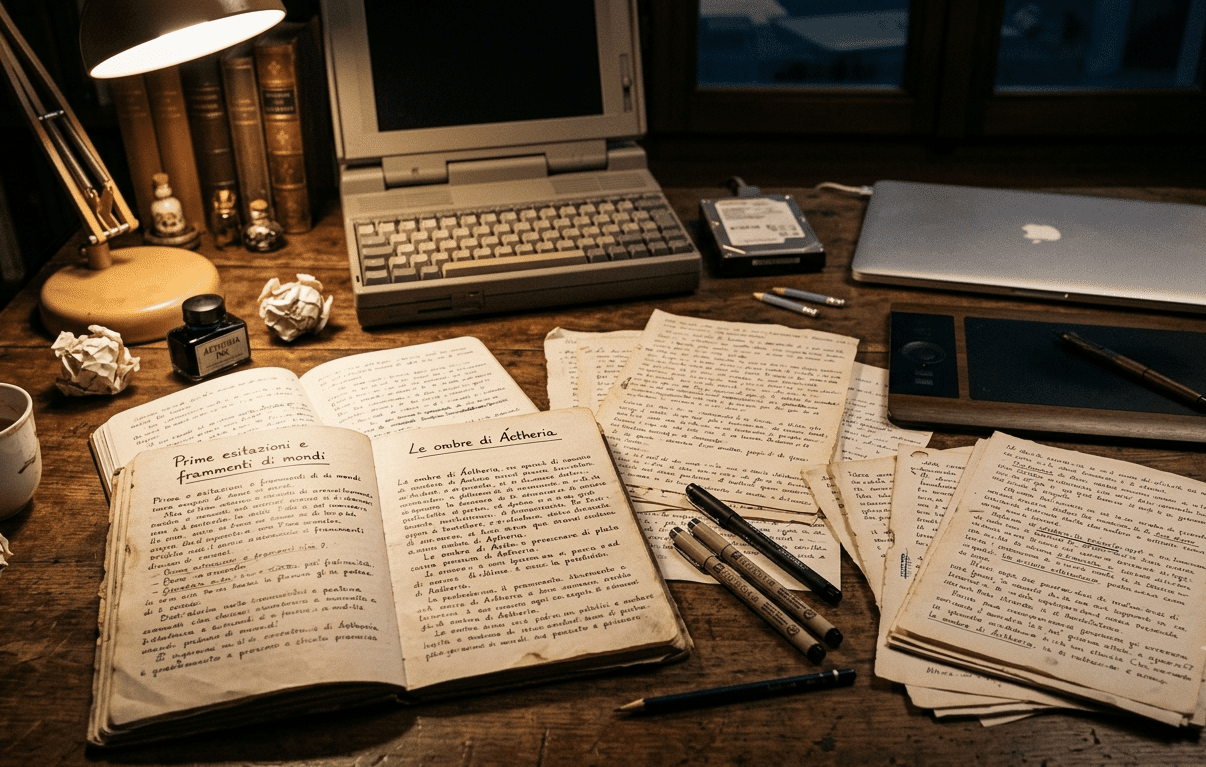
Initially, my stories actually started on a bright computer screen. I recently found an old external hard drive containing files dating back to 2009. Over time, however, I found that the weight of the laptop on my lap and, above all, the mechanical clicking of the keys in the quietest hours of the night distracted me from the plot. It broke the magic and drove inspiration away.
Having always been a lover of handwriting, I sought the silence of notebooks and pencils. However, there came a time when even graphite had to give way. Since I did most of my writing at night, in bed, the eraser shavings on the page inevitably ended up between the sheets, becoming an impossible distraction. That was when I officially switched to ink. (And I won’t deny that, between one late-night session and another, the pen left a few permanent marks on the bedsheets too!).
I truly believe there is something deeply intimate about the connection between the hand, the pen, and the paper. A keyboard forces a speed that often does not belong to the characters; it corrects, deletes, and makes everything look too permanent and static from the very beginning. Handwriting, on the other hand, allows for mistakes. It leaves the mind free to imagine every situation, every dialogue, and every single transition without any distraction.
Those notebooks were my true treasure chests. They guarded the early hesitations and fragments of worlds that no one else knew yet. Many stories were born on those pages, including the two you can read today: Shadows of Áetheria and the hidden details of The Midnight Girl.
Then, I don’t exactly remember how or why it happened, life led me to put writing aside. Sometimes daily duties, urgencies, and priorities take over, suppressing our true nature to make room for everything else.
When, after almost fifteen years, I found those notebooks inside an old box, it felt like recovering a part of myself I had forgotten. Rereading those pages brought me back in time: I could see myself again, sitting on my bed with only a lamp illuminating the page, creating the very first settings, characters, and personalities. In that moment, I realized it was time to share the stories that had kept me company for years, allowing them to finally find a new home.
In the meantime, laptops had become lighter, keys grew quieter, and technology became more integrated into our daily lives, so I decided it was time to transcribe everything.
However, I have a confession to make. Caught up in a total Marie Kondo decluttering craze and her famous mantra “if you don’t use it, throw it away” once I digitized all the content… I threw the notebooks away. A bit of a sacrilege, I know, but the digital transformation was complete! And her mantra was still echoing in my head.
And so, after more than a year and a half of intense editing and digitizing, my first stories finally came to life. Not without surprises, but that is a story I will tell you further down the road.
What about you? What kind of readers or creators are you? Do you find yourself charmed by the warmth of paper, or do you prefer the precision of the digital world?
Leave a Reply